Showing posts with label Samsung. Show all posts

Sunday, 21 August 2011

Samsung Omnia I900 Review

Introduction

Now that the dust of the Diamond vs. Omnia PocketPC battle settles down, our up close and personal look at the rivals continues with Samsung i900 Omnia. Slick looks, great feature-pack and ingenious software solutions are things that hold true for the i900 Omnia in the same extent as for the Diamond.

And since the Samsung i900 Omnia boasts loads of character and personality it’s no wonder it holds the crowd hooked ever since it was announced. The first five megapixel Windows Mobile cameraphone has inspired quite a following and now that it’s already market available in Europe we are more than happy to welcome the Omnia back after a well deserved breather. Well then, we’ve seen it race, let’s watch it cruise.

Key features:

Quad-band GSM support
3G with HSDPA 7.2 Mbps
Windows Mobile 6.1 Professional OS
624MHz Marvell PXA312 CPU and 128 MB RAM
3.2? 65K-color touchscreen with resolution of 240 x 400 pixels
5 megapixel autofocus camera with wide dynamic range mode, face tracking, smile detection, geotagging
8 to 16 GB of storage memory, microSD expansion
Built-in GPS receiver with A-GPS
Wi-Fi
Stereo Bluetooth and USB connectivity
FM radio with RDS
Optical joystick with virtual mouse functionality
Built-in accelerometer for auto screen rotation and call muting
TV-out
Solid build and great finish
Slick design and slim body
Nice battery life
Fast response and performance
Excellent thumb-optimized software package
Thumbable virtual QWERTY keyboard with optional landscape mode
TouchWiz UI
DivX video support right out of the box
Above average audio quality
Headset comes with a 3.5mm audio jack

Main disadvantages:

No stylus slot
Poor sunlight legibility
Memory card not hot-swappable
Non-standard display resolution
No dedicated 3D accelerator
Non-standard USB port
Web browser lacks real Flash support

The PocketPC mid-season may as well be a hush before the storm with the HTC Touch Pro and Xperia waiting to be unleashed. But for now we have two other bitter rivals to keep us busy: Samsung i900 Omnia and HTC Touch Diamond. It truly is a great achievement for Samsung to have a gadget fit to stand up to the top PocketPC manufacturer HTC.

Tweet

View the original article here

Tuesday, 16 August 2011

Samsung Galaxy I7500 Review

A new addition to the plethora of android mobile handsets is the Samsung Galaxy series. This is Samsung's first android handset and five of its best so far. It combines style with great features and display and web connectivity.Cell Phone

This new phone from Samsung sports a slim and sleek look. However, the Galaxy is made of plastic and therefore fingerprints tend to accumulate on the surface. This is obvious when you take the mobile out in to the sunlight. Keep cleaning it if you need to maintain a new and stylish look.

The Samsung Galaxy or Samsung i7500 is also known by its model number as the Samsung i7500. Samsung Galaxy or Samsung i7500 Mobile Phone Review,Cell Phone, features and specification.

Coming over to the key pad, the Galaxy i7500 has a D-pad with 4 main keys surrounding a centrally located OK button. The keys aid different functions like switching over to phone menu, locking and unlocking the display, ending action and so on. It is easy to use and self explanatory.

The phones 3.2 inch AMOLED screen has a resolution of 320x480 pixels and comes with a light sensor which enables you to set the screen brightness according to the environment. The screen has 16 mln color support which guarantees you superior picture quality.

The Samsung Galaxy or Samsung i7500 sports a virtual key board which enables users to type text with ease.Cell phone The key board is in the QWERTY format and can be used in both portrait and landscape modes. Turn on vibration or sound features to enable you to receive a better feel of the whole typing task. It feels like typing on a computer or lap top. phone book has several chilled features which enables users to store a lot of data per contact. Users can save names, e-mail and postal addresses, chat names, company names, positions etc of each contact. You can sync contacts to your Google account. The phone book also has an option which enables users to divert calls from definite numbers to voice mail.


Cell phone the Samsung i7500 phone`s calendar can also be synched to Google and has features which allows the user to view their daily, weekly or monthly agenda. Important dates and events can be highlighted and events which recur can be tracked. The phone also has a standard calculator.

The interface is based on Android 1.5 and makes up for a lot of shortcomings in the Android 1.0 version.
The Samsung Galaxy i7500 has an stunning and easy to understand home screen. It consists of five pages though. You can add widgets, shortcuts and applications to your home page. Navigation between the five ages is easy and all five pages have the same wall paper.Cell phone This should ease confusion.

The phone has a 3.5 mm jack and micro USB port on its upper side. It is discreet and convenient and does not interfere with the style.

When it comes to capturing videos, this model is below par. It's a resolution of about CIF (352x288). This is not much. Picture quality is therefore not lovely although, overall quality is not bad. The Samsung Galaxy i7500 has features like additional microphone and lovely sound quality so the videos sound great of this cell phone

People who frequently use the net will enjoy the Galaxy's samsung i7500 unparalleled browsing experience. Pages load fast and the user can book mark pages, add to favorites, copy or paste data, search fort text within a page and so on.

Sunday, 14 August 2011

Samsung BD D5500 Blu-ray Player Review

Blu-ray players haven’t reached DVD levels of cheapness yet, but they’re getting there. You can now pick up a hi-def spinner from supermarkets and online for well under the magic £100 mark, which is great news for anyone looking to upgrade to HD on a tight budget. 

But these cut-price players aren’t necessarily bog-standard affairs – some, like the Samsung BD-D5500 on test here, still manage to bring you plenty of alluring features, which make them extraordinarily good value for money.

Naturally the design of the BD-D5500 has been compromised at this price – the bodywork is a little light and plasticky, plus the all-black styling lacks the pizzazz of Samsung’s silver players like the BD-D6900. There’s an old-fashioned disc tray in place of Samsung’s usual motorised slot too. But it does retain the clever touch-sensitive display panel, which cuts down fascia clutter, plus the super-slim, three-tiered shape sets it apart from other set-top box style players. You’ll find a USB port lurking under a flap on the right-hand side of the fascia, and on the back you’ll find a decent selection of sockets. They include HDMI, component, composite, analogue stereo and optical digital audio outputs, an Ethernet port and a second USB port provided purely to house Samsung’s Wi-Fi adapter (WIS09ABGN), should you choose to buy one – unsurprisingly there’s no built-in Wi-Fi.If you want a wireless web connection, the USB adapter will add quite a chunk to the overall price. But it’s worth the investment, as it makes it much easier to access the player’s range of connected functions. We’re pleased to say that one of these is Smart Hub, an onscreen interface that brings you a range of ‘Samsung Apps’, including catch-up TV services, social networking sites, movies, video streaming, games, puzzles and loads more. 

The key apps are BBC iPlayer, BBC News, YouTube, Facebook, Twitter, Box Office 365, Google Maps and LoveFilm. The beauty of it is that you can add new apps as and when they’re added by visiting the app store at the top of the Smart Hub interface, and once installed you can organise them into folders.Also found within Smart Hub is Your Video – which displays information about the movies available in Smart Hub apps, as well as giving ratings and recommendations – and a Search tool that looks for content by keyword. All-in-all Smart Hub is a beautifully presented and intuitive feature that adds a great deal of value to the overall package.

This wealth of online content is joined by AllShare DLNA media streaming, another mainstay of Samsung’s Blu-ray range. It allows you to access music, videos and photos stored on PCs, NAS drives and other devices on your home network. What separates Samsung’s streaming feature from its rivals is the breadth of supported formats – with MKV, AVI, WMV, DivX HD, XviD, AVCHD, MP3, WMA and JPEG on the list, this is the perfect player for those with large and varied digital media collections. The good news is that you can play these files from USB sticks too
So far so generous for a so-called budget player, but surely 3D support would be too much to ask at this price? Seems not. The BD-D5500 can indeed play 3D discs thanks to the HDMI v1.4 output, so anyone with a compatible TV can see what all the fuss is about without having to pay through the nose. However, there’s no 2D-to-3D conversion as found on Samsung’s higher-end players, one of the few casualties of that budget price tag.

And in keeping with the other Samsung Blu-ray products we’ve tested this year, the BD-D5500 is an absolute joy to operate. Not only is the onscreen presentation gorgeous, using full colour HD graphics, impressive animations and a straightforward structure, but it’s also slick and responsive when moving the cursor around.

Nowhere is this more apparent than on the inventive, sophisticated main menu, which shows a row of options sitting on a platform along the bottom – move left or right and the icons scroll along like they’re on a conveyor belt. These icons and the huge text above them make it easy to find any function, giving them obvious names like ‘My Devices’ and ‘Internet’.

This slickness and logicality permeates every screen, including the crucial setup menu. We particularly like the Network Settings section, which uses animated graphics to show you how to get online, as well as displaying easy to follow instructions. This is definitely a player designed to appease experts and technophobes alike.

Smart Hub might look a little busy at first glance but its layout is actually very thoughtful. It’s designed to resemble an Android handset or iPhone, with little square thumbnails arranged in a grid – a wise move given how easy those gadgets are to use. The only real difficulty we encountered was punching text into the dialogue boxes when setting up accounts or using apps like Facebook – there’s a mobile phone-style text entry system that means well but always takes an age to use.
Finally a word about the remote, which is child’s play – literally. The huge rubbery buttons, massive lettering and colour-coded keys make it look like something designed to control a toy robot or battery-powered space station, but that can only be a good thing. The intelligent button layout is the other key to its success, with a perfectly placed multi-directional pad and playback controls.The BD-D5500 takes 46 seconds to load Terminator Salvation, which is relatively fast. And from the opening scenes of The Dark Knight, it’s clear that the BD-D5500 is an assured picture performer. As the camera moves towards the towering skyscraper, the image is dazzlingly crisp, allowing you to make out textures and delicate shading on the rooftops of the other buildings. And where the edges of the buildings meet the sky it’s emphatically sharp, with no noise to speak of.

Superb detail reproduction is backed up by a level of depth that makes the image appear suitably filmic at all times, but the perfectly-judged contrast allows you to make out everything that’s going on. So when viewing the scene in the car park as Batman goes up against Sandman’s gang, you can discern fast-moving objects, black costumes and even facial detail. 
Colour reproduction is also excellent, with the Samsung getting skin tones spot-on and displaying the bright blue sky with dazzling vibrancy as the Joker blows up the hospital. We’re also impressed by the depth of blacks and the clear shadow detail within them. You might get a little more clarity by investing in a more expensive player but it’ll be a marginal amount.

Switching over to 3D (viewed on a Sony set) there are no problems with the quality of the deck’s image layering or with crosstalk, which results in an immersive viewing experience. You also get crisp detail, gorgeous colours and smooth motion, clearly demonstrated by our Avatar and Monsters Vs Aliens test discs.

Your DVD collection is also in safe hands, as the BD-D5500 upscales SD content with few artefacts, plus the quality of Smart Hub videos is excellent, making programmes on BBC iPlayer look remarkably smooth and free from the usual block and mosquito noise associated with web videos.

Verdict

With Smart Hub, DLNA streaming and 3D support on board, the Samsung BD-D5500 represents excellent value for money for under £100. It also welcomes a wide range of digital media formats, boasts two USB ports and a first-rate operating system. There’s no built-in Wi-Fi and the design isn’t up to the standards of other Samsung players, but on the whole you can have few complaints when you’re getting a player as good as this for such a low price.

Samsung HT-D6750W Surround Sound System Review


Samsung HT-D6750W

Samsung’s all-in-one Blu-ray systems are famed for their stylish designs and packed feature lists, and the HT-C6750W is no exception. This 3D-ready affair boasts all of the new features that wowed us on the BD-D6900 and BD-D8500, but throws in a few new audio tricks for good measure. It comes with two 1,320mm-high towers for the front channels, complete with a unique twist that we’ll tell you about later, as well as two tallboy rears, a slender centre speaker and passive subwoofer.The main unit isn’t quite up to Samsung’s usual eye-popping standards, but still looks funkier than most other systems on the market. The all-over gloss black finish is as sleek as ever and despite having loads of tech squeezed under its bonnet the bodywork is pleasingly slim. It’s also great to see the new front-panel display incorporated here – the illuminated touch-sensitive controls and disc slot are built-into the same panel as the LED display, leaving the rest of the fascia uncluttered. On the right-hand side, you’ll find a ‘hump’ that houses touch-sensitive volume controls, and below this is a flap that hides the obligatory USB port and an input for the sound calibration microphone.Spin the unit 180 degrees and you’ll expose a pleasing array of sockets, most notably two HDMI inputs. These are found on fewer systems than you might think, which is a shame because they’re remarkably useful if you have several HDMI-equipped sources but only one or two inputs on your TV.They also let you enjoy digital audio from those sources without having to rig up separate optical cables, although there is an optical digital input here should you need it. The HDMI output is of the v1.4 variety to facilitate the system’s Full HD 3D compatibility, which also supports the Audio Return Channel feature.The interesting stuff doesn’t stop there. You’ll also find inputs for the supplied iPod/iPhone dock and for the wireless transmitter card, which enables you to beam audio to the rear speakers without having to run cables along the length of the room. The transmitter card and receiver unit are included in the box, although it’s not truly wireless as you still need to run cables between the receiver and rear speakers.Completing the socketry line-up are component and composite video outputs, analogue stereo input, an FM antenna input and Ethernet port. There’s also a panel of colour-coded speaker plugs that make it simple to connect the cables.The tower speakers are dressed in a sumptuous gloss black finish to match the main unit, which attracts dust and fingerprints like you wouldn’t believe but looks stunning when polished. The rear speakers come in three parts – the hollow lower section screws on to the base, seemingly at an angle, while the top part housing the drivers (two midrange and a tweeter) slots snugly onto the lower section. On the back are springclip terminals.The front speakers are similarly styled but there are significant differences. Above the three midrange drivers and tweeter is a swivel speaker that can be angled upwards. This is part of the new Vertical Surround feature, which does the same sort of job as Dolby Pro Logic IIz, isolating non-directional effects to create virtual height channels and firing them upwards to give a greater sense of horizontal and vertical envelopment. It’s a great idea, bringing the benefits of Pro Logic IIz without the hassle of rigging up separate speakers at the front of the room.The front speakers are put together in a similar way to the rears, except that the speaker cables are permanently attached, which means you have to feed them through the base before screwing them together.In addition, built-in speaker terminals allow the top section to slot in without the need to connect fiddly springclips. Unusually, each front speaker connects to two terminals on the back of the main unit, one feeding the main drivers and the other feeding the swivel driver, but the cables have pre-attached dual plugs that make this less complicated than it sounds.The compact, unimposing subwoofer is styled in a deeply sexy black finish, with a lovely brush-effect panel on the right and a large port on the side. The lightweight build quality does nothing to ease our apprehension about the nature of passive subs and the lack of control over their performance, but you certainly won’t hear any complaints over how it looks.

Finally, the centre speaker is as stylish as the other components, and with its compact dimensions (360(w) x 74.5(h) x 68.5(d)mm) you shouldn’t have any problems sliding it into a packed AV cabinet.With such an all-encompassing feature list, it’s hard to know where to start. A good place would be Smart Hub, perhaps the most appealing of Samsung’s 2011 updates. It’s an Internet portal that offers a wide range of social networking, catch-up TV and video-on-demand ‘apps’ – Facebook, BBC iPlayer, YouTube and LoveFilm to name but a few. It looks radically different to the previous Internet@TV service, sporting a funkier, friendlier feel, plus a series of new customisation features (such as the ability to group apps into folders) that give you more control over your content. 

Two other additions are Your Video, which recommends videos based on viewing habits and ratings, and Search All, which trawls the web apps for content that matches a specified keyword. For more on Smart Hub check out our reviews of the BD-D8500 and BD-D6900.

They’re joined by AllShare, Samsung’s DLNA networking feature. Using this you can stream media from PCs and NAS drives on your network, and the clean, colourful menus make it easy to navigate around your device’s folders. The system supports an unusually generous range of formats too, including MKV, DivX HD and WMV. The USB port provides an alternative way of playing digital media if you’re not on board with the whole streaming phenomenon, plus it also supports iPods and iPhones.Media streaming and Smart Hub can be accessed without an Ethernet cable in sight thanks to the built-in Wi-Fi capability, which is incredibly easy to set up thanks to Samsung’s attractive installation wizard. And as if that wasn’t generous enough, there’s also 2GB of local storage on board, so you can download BD Live content without having to plug in a USB stick. Nice.

On the Blu-ray side the HT-D6750W supports 3D discs, but it will also jazz up your 2D discs into 3D. This has filtered through from Samsung’s TVs and is a very attractive feature on paper – the significance being that you can now enjoy this feature no matter what brand of 3D TV you own, as until now it has only been available on Samsung’s TVs (although Panasonic has added it this year).

Finally, you’ll find a bevy of audio features, including the new 3D Sound mode, which attempts to deliver an extra sense of depth and richness. There’s also Smart Volume, MP3 Enhancer, Power Bass and eight DSP modes with wacky names like Jazz Club in Seoul. The system also kicks out 1,330W of power, which, if accurate, is formidable. 

The onscreen menus are the epitome of user-friendly, sporting a gloriously warm and fuzzy colour palette and legible text across the board. It’s just a shame that the newly introduced Home menu, which uses large animated icons, is a little sluggish to respond. We never had a problem using any of the new Smart Hub features though – everything is self-explanatory, and even though entering passwords and e-mail addresses is a pain, at least it remembers what you entered for the next time you use it. 

And as per usual, the remote is laid out in a clear, intuitive fashion. We love the large, rubbery buttons and the bold lettering. The various sound modes are clearly signposted towards the bottom, while the playback, menu and volume controls are exactly where your thumb expects them to be. Great stuff.Overall, the HT-D6750W’s sound quality is good by usual all-in-one standards, but a few sonic shortcomings remind you of the system’s cost-conscious origins.

With Inception’s DTS HD Master Audio soundtrack, the HT-D6750W reproduces the loud, powerful orchestral stabs with considerable force and without any clear evidence of distortion or cabinet rattle, even with the volume pushed beyond a comfortable listening level. Underpinning the sharp orchestral notes are long bass tones, which sound deep and foreboding.

It also has no trouble picking out the soundtrack’s delicate high-res detail. The supplied speakers demonstrate surprising sensitivity for an all-in-one system, drawing out subtle background detail like the hushed voices and gentle murmur of traffic as Cobb and Ariadne walk the streets, or the ambience within the Mombasa café as Cobb and Eames chat about the job. That makes the sound seem airy and multi-layered, and because the rear speakers boast similar detail-handling prowess it makes for an absorbing soundstage all around the room.

Dialogue is perfectly audible too – even during frenetic action scenes you can clearly discern what characters are saying, plus shouting causes no sibilance or distortion.
Although the sound is crisp and dynamic, when the system is being driven at high volumes some of the high-frequency effects prove a little too much for the speakers to handle. For example, as Cobol henchmen chase Cobb through the Mombasa streets, the metallic chink of gunfire has a little too much ‘edge’, not the neutral, controlled tone that you’d get from a more proficient system. The same problem occurs when Ariadne shatters the mirror – as the glass hits the floor the sound is slightly too hard on the ear. That said, the level of harshness is nowhere near as bad as some rival systems.

Another problem involves the subwoofer, which delivers a deep rumble to bolster key action scenes, but inevitably, there’s a lack of grip and tautness – ideally bass would be punchier. But this is one of the downsides of passive subwoofers.

But back to the positives, and Vertical Surround is an effective addition to the feature list. During the scene in Terminator Salvation showing a helicopter flying across the ocean through wind and rain, it gives the impression that the ambient rain effects are coming from above the listening position. It’s not easy to pin-point the source of the sound, but the soundstage certainly feels fuller and more immersive with Vertical Surround engaged.

As for 3D Sound, you can hear a slight boost in depth and richness when activated, but the result isn’t wholly satisfying, making the sound a little coloured – some listeners may like the effect.

As for picture quality, it passes pixels to our test TV without any issues. Images look deep and punchy, with few artefacts to speak of besides inherent film grain. Detail retrieval is superb, edges are smooth and it renders colour blends, shadow detail and tricky skin tones without any trouble.

These qualities are present with both 2D and 3D images – with the latter it picks up where the BD-D6900 left off with its stable reproduction of Avatar’s deep, detailed layers. As we found with Panasonic’s 2D-to-3D conversion, Samsung’s mode is no match for real 3D, but with 2D discs like Avatar you can get some fairly effective results.

Verdict

The HT-D6750W presents us with a bit of a conundrum. On paper, it’s an astonishing proposition, boasting an incredible feature list that reads like an A to Z of current home cinema trends, plus the external styling and jazzy onscreen design are real treats for the eyes. We like the new audio features too, particularly Vertical Surround with those distinctive swivel speakers.

But in action, a couple of sonic shortcomings take a little sheen off the overall package. So you have to ask yourself – is it worth tolerating these relatively minor flaws to get your hands on all that other good stuff, given that such compromises are inevitable when opting for an all-in-one system? After much consideration we’d have to say yes – the HT-D6750W definitely deserves a place on your shopping list.

Thursday, 11 August 2011

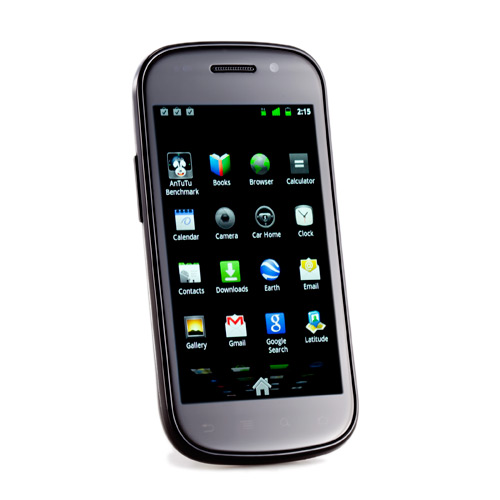
Samsung Nexus S Review


The Samsung Nexus S was born to be a pleasant, midrange Android phone. And that's what it's become, nine months into its life, as it finally appears on AT&T: A no-nonsense, affordable, attractive touch-screen smartphone, albeit one without much to propel it past other smartphones. The Nexus S will appeal to Android hackers and developers because it runs stock Android 2.3, rather than a carrier or manufacturer version. That means it's easier for adept users to edit or replace the operating system on the phone, and future Android upgrades will probably come more quickly than they do for other handsets.
Physical Features, Call Quality, and InternetThe AT&T Nexus S uses the same body as T-Mobile's version (4 stars), which debuted last December. At 4.9 by 2.5 by 0.4 inches and 4.5 ounces, the Nexus S is a black slab phone that's noticeably smaller than the recent round of humongo-phones with 4.3-inch screens. The Nexus looks elegant because it uses more rounded corners and a black bezel, rather than cheaper-looking chromed plastic. The 4-inch, 800-by-480 Super AMOLED screen is curved to cradle your face, but, in use, I couldn't feel any difference between it and a perfectly flat screen.Samsung and AT&T have clearly been working to improve the reception on this phone; I got strong RF reception and excellent voice call quality, better than on the T-Mobile or Sprint models. The earpiece is loud and clear and doesn't distort, and the speakerphone is one of the loudest I've used recently. The down side is on transmissions: on the other side of a call, transmissions sounded oddly scratchy and a bit echoey. The phone had no problem hooking up to my Aliph Jawbone Era Bluetooth headset ($129, 4.5 stars) and activating voice dialing. I got 8 hours, 10 minutes of talk time, which is very good for a 3G phone.
The Nexus S connects to AT&T's network at respectable 3G, HSPA 7.2 speeds. I got around 1500Kbps down and 150Kbps up. That's long been outpaced by HSPA 14.4 and HSPA+ 21 phones, which can get speeds of double or triple that on AT&T's network. The phone also has Bluetooth, Wi-Fi 802.11 b/g/n, and a GPS which (unlike on T-Mobile's version) locked in quickly. NFC wireless technology is built in, and could someday let your phone be used as a digital credit card. But for now, I couldn't even find anywhere in New York City to test NFC.
Android and App Performance
The Nexus S has one killer feature for Android geeks and software developers: it runs an unmolested version of Google's "pure" Android, which hasn't been edited or locked down in any way. For now, that means Android "Gingerbread" 2.3.4. If you're a hacker or software developer, this is your dream phone.
You'd think the "pure" Android version would give the Nexus S a leg up over other phones in benchmarks, but that's not entirely the case. Let's set aside the new crop of dual-core phones and compare the Nexus S to similar single-core, 1GHz devices. We know that Samsung's 1GHz Hummingbird has excellent all-around system performance, and the Nexus S beat similar 1GHz phones like the Qualcomm-based HTC EVO 4G and Motorola Triumph on the all-around Antutu system benchmark as well as GUIMark's Flash tests.
But oddly, that didn't translate into triumphant results on browsing benchmarks; the EVO beat the Nexus S 4G on the Sunspider Javascript test, while the Triumph beat it on the Browsermark test. This phone performs well, just not much better than the competition, and its 1GHz processor is outmatched by higher-end dual-core models nowadays. I found similar results with the previous Nexus S models, where I said, "The UI is faster all around than on Android 2.2 phones, though Web performance isn't."
Many techies fetishize "stock" Android because carrier OS versions drag down performance, but those manufacturer versions have their own strengths. For instance: The touch keyboard on the Nexus S is much smaller than on Motorola and HTC phones, which may cause frustration for folks with clumsier fingers.
Since there are no carrier or manufacturer preloads here, the Nexus S is what you make of it. Android Market, with its 200,000 applications, is open to you, and the Nexus S is compatible with nearly everything. That makes sense, given that the Nexus S is Google's official developer phone.Multimedia and Conclusions
The Nexus S is a pretty good media phone, although it lacks removable memory. There's only a non-expandable 16GB of internal storage, and if you want to load media, you have to hook the phone up to your PC with a USB cable.
Audio and video support also have some trouble with key codecs. The music player supports most file types except WMA, and high-bit rate H.264 video files showed visibly jerky frame rates. Music and video sound great through wired or Bluetooth headphones, though, and YouTube plays in HQ mode if you have sufficient network speed.
The Nexus S has a 5-megapixel camera on the back and a VGA camera on the front, for video calling. This is one of the few phones which works with Google Talk's video chat mode. In my tests, the main camera took relatively sharp photos with a satisfying 1,400 lines of resolution, which is much better than the competing LG Thrill 4G ($99.99, 4 stars), for instance. But they were very bright, with blown-out white areas in daylight and intensely harsh contrast in low light. The video mode took smooth 720-by-480 videos at 30 frames per second both indoors and out.The Google Nexus S is an excellent midrange Android smartphone. It isn't cutting-edge in any way, and it falls down on some processor-intensive tasks like H.264 video files. At $99.99, we still prefer the HTC Inspire 4G (4 stars). It has a bigger screen, a faster Internet connection, and excellent built-in social networking and other widgets with HTC Sense. I'm also pretty confident the Apple iPhone 4 ($199.99, 4.5 stars) will come down in price soon, which would make it another superior choice. If your priority is to have an Android phone you can hack, though, the Nexus S has no peer.
The Nexus S is available with a two-year AT&T contract for $99.99 from Best Buy, and without a contract at higher prices from various other retailers.

Wednesday, 10 August 2011

Galaxy Fit Review

You may have a hard time finding this one in the deluge of entry-level smartphones, for which Samsung is in no small part responsible. Don't worry, it will find you. The Samsung Galaxy Fit will be ready and set well before the thought of upgrading ever crosses your mind.
The times are long gone when smartphones were scary and complicated. Little green men were a hoax, the little green robots are the real deal. And Samsung are busy carrying out their plan. Match every touchscreen feature phone - every Corby and every Star - with a droid smartphone.

The Galaxy Fit is the next in line of mass-market smartphones as Samsung look to simply outnumber the competition where they cannot outplay or outsmart it. The Fit might seem like a minor update of the Galaxy Mini: a tad bigger screen and a 5 MP autofocus camera, but in that price range those are still significant arguments to have on your side.

Key Features

  • Quad-Band GSM and dual-band 3G support
  • 7.2 Mbps HSDPA
  • 3.3” 65K-color QVGA TFT capacitive touchscreen
  • ARMv6 600MHz processor, 280MB RAM
  • Android OS v2.2.1 Froyo with TouchWiz v3.0 UI, Gingerbread coming up
  • 160MB of internal storage, hot-swappable MicroSD slot, 2GB card included
  • 5 MP autofocus camera with geotagging, smile detection
  • GPS receiver with A-GPS
  • Stereo FM radio with RDS
  • 3.5mm audio jack
  • Document viewer
  • Accelerometer and proximity sensor
  • Swype text input
  • MicroUSB port (charging) and stereo Bluetooth 2.1
  • Social network integration
  • Good build quality

Main disadvantages

  • Low screen resolution
  • No touchscreen haptics
  • No Flash support in the web browser
  • No video-call camera
  • No flash, no camera key
  • No DivX/XviD support out of the box
  • Poor QVGA video recording @ 15fps
The styling is a little bit subtler, but not in a way to expect it to appeal to business users or an older audience. That said, dropping the original working title of Galaxy Suit makes sense. It just sent the wrong message about the dress code.
The Galaxy Fit doesn't have the features to be considered as a business tool. It's a bottom-of-the-food-chain kind of smartphone and it knows it. The friendly little gadget is on the cheap side of smartphones, but keen to deliver complete connectivity and above average imaging. The low-res screen is the flip side of the coin.